

What's Really in Your Food, Your Home, and Your Body
- Nika Alexandra
- Dec 5, 2025
- 6 min read
Are you eating healthy and working out but still feel sluggish, always catching colds, get allergies, and can't seem to shed stubborn weight?
It could be because your intelligent body is too busy trying to detox.
Microplastics have been found in human blood, brains, placentas, and hearts — and levels are rising fast.
This isn't a scare tactic. It's reality. And while we can't eliminate every exposure, we can start making choices that lighten the load on our bodies — so they can do what they're designed to do: protect us.
The Plastic Problem
Let's start with some numbers that might keep you up at night:
Your brain is now 0.5% plastic by weight — and that number has increased 50% in just 8 years
Every liter of bottled water contains up to 370,000 plastic particles (90% of which are nanoplastics — the smallest and most dangerous kind)
A single hot drink in a paper cup releases approximately 25,000 microplastic particles in just 15 minutes — plus heavy metals like lead, chromium, and cadmium
Pro tip: Carry your own reusable container for hot drinks. Most cafes are completely used to people asking to use their travel mug instead of a disposable cup — it's more common than you think.
Microplastics have been found in lungs, livers, kidneys, blood, reproductive organs, and even crossed the blood-brain barrier
People with microplastics in their arterial plaque were 4.5x more likely to have a heart attack or stroke
Plastic isn't just an environmental issue. It's a metabolic one. These particles act as endocrine disruptors — meaning they interfere with your hormones, your blood sugar regulation, and your body's ability to function properly.

The BPA-Free Lie
Here's some uncomfortable truth: that "BPA-Free" label on your water bottle? It's greenwashing at its finest.
BPA was simply replaced with BPS and BPF — chemicals that research shows are just as harmful
ALL plastic leaches. Period. The type doesn't matter.
Oils and fats accelerate leaching — that leftover curry in a plastic container? Maximum exposure.
Heat accelerates leaching — microwaving plastic releases chemicals directly into your food
There's no such thing as "microwave safe" or "dishwasher safe" plastic. These are marketing terms, not safety guarantees.The combo effect is the worst: oily food + heat + plastic = maximum chemical exposure.

And if you're thinking recycling or 'biodegradable' options are the answer — think again. There's no such thing as truly recyclable plastic — less than 10% ever gets recycled, and the process itself creates microplastics. 'Biodegradable' plastic isn't much better: it requires specific industrial conditions to break down. In a landfill or ocean, it lasts just as long as regular plastic — and still fragments into microplastics. Awful, isn't it?
Microplastics Hiding in Your Home
Indoor air contains up to 60x more microplastics than outdoor air.
Here's where they're coming from:
Carpets & rugs — synthetic fibers shed constantly, especially when walked on
Printers — toner particles are released into the air every time you print
Candles — paraffin wax (petroleum-based) releases microparticles and toxins when burned
Synthetic clothing — polyester, nylon, and acrylic shed when worn and release thousands of particles when washed
A note on clothing: Try to purchase natural fiber clothing whenever possible — especially items that sit close to your skin like underwear. The skin in these areas is extra delicate and absorbs toxins more readily. You don't need to throw out all your synthetic clothes tomorrow — just slowly phase out older items and commit to buying natural fibers (cotton, wool, linen, silk) from now on.
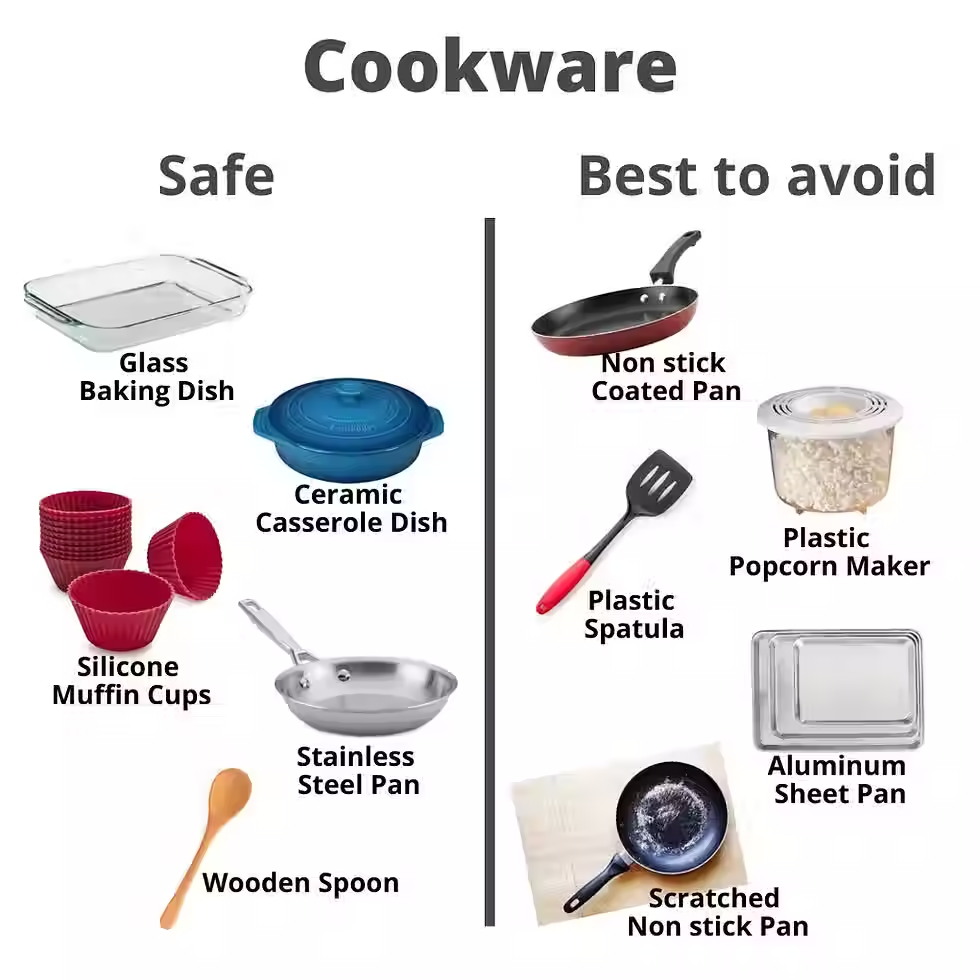
Non-stick cookware — Teflon breaks down with heat and releases PFAS (forever chemicals)
Dryer sheets & fabric softeners — coated in synthetic chemicals that transfer to your clothes and skin
Tea bags — many contain plastic mesh that releases billions of particles when steeped in hot water
Furniture & upholstery — foam, synthetic fabrics, and flame retardants shed into household dust
In Your Food
We hear a lot about microplastics contaminating our food and water - tiny fragments from packaging, bottles, and environmental pollution. But here's something most people don't realize: we're not just accidentally exposed to plastic. We're actually being fed petroleum derivatives and plastic-like polymers on purpose. These are intentional ingredients, approved and added by manufacturers to make food look better, last longer, and cost less to produce.
Petroleum-derived additives (same source material as plastic):
Artificial dyes (Red 40, Yellow 5, etc.) - made from petroleum
BHA, BHT, TBHQ - petroleum-derived preservatives
Mineral oil - used to coat some candies and dried fruits
Paraffin wax - coats some fruits, candies, and cheese
Actual polymers added to food:
Polydimethylsiloxane (PDMS) - a silicone polymer added to cooking oils and fast food fryer oil to prevent foaming. It's in McDonald's fries, Wendy's chili, fountain drinks. This is literally a type of silicone plastic.

Plastic-adjacent industrial fillers:
Microcrystalline cellulose - heavily processed wood pulp used as filler and anti-caking agent (shredded cheese, supplements, low-calorie foods)
Carboxymethylcellulose - modified cellulose, used as thickener
Body Care Products
What you put ON your body matters just as much as what you put IN it. Your skin is your largest organ — and it absorbs what you apply.
Watch out for:
Microbeads — tiny plastic spheres in exfoliants and scrubs (look for polyethylene on the label)
Synthetic fragrances — "fragrance" or "parfum" can contain hundreds of undisclosed chemicals, many of which are endocrine disruptors
Parabens (methylparaben, propylparaben) — preservatives that mimic estrogen
Phthalates — plasticizers often hidden under "fragrance"
Silicones (dimethicone, cyclomethicone) — synthetic polymers that coat the skin
Simple swap: Look for products with recognizable ingredients, or explore DIY options using simple ingredients like oils, butters, and essential oils.
Tools to Check Your Products:
EWG.org (Skin Deep database) — the gold standard. Search any product or ingredient. Rates 1-10. Free.
Think Dirty app — scan barcodes, get instant ratings (0-10). 850,000+ products. Free with premium option.
Yuka app — scans both food AND cosmetics. Rates out of 100 and suggests better alternatives. Independent (no brand funding).
Why Your Body Can't Keep Up

Here's the thing: a healthy body CAN detox these exposures. Your liver, kidneys, lymphatic system, and even your skin are designed to process and eliminate toxins.
But here's the problem. We're being inundated from every direction — air, water, food, personal care products, our homes. And most of us are already running on systems that are struggling with:
Poor sleep
Chronic stress
Processed diets
Sedentary lifestyle
Blood sugar instability
When your detox pathways are overwhelmed, everything else starts to break down:
Your immune system can't protect you the way it should
Chronic inflammation takes hold — the root of nearly every modern disease
Your cancer-fighting cells (like natural killer cells) can't function properly in an inflamed environment
This isn't about being perfect. It's about reducing the load so your body can do its job.
One of the best ways to support your body's natural detox? Sweating. Cardio exercise or regular sauna sessions are incredibly effective at helping your body release stored toxins through the skin.
Simple Swaps & Where to Start
You don't have to overhaul your life overnight. Start with the highest-impact changes:
In the Kitchen:
Switch to glass or stainless steel containers for storage
Never microwave or dishwash plastic — ever
Use a water filter (reverse osmosis or water distiller)
Choose loose-leaf tea or plastic-free tea bags
Cook with cast iron, stainless steel, or ceramic — ditch the non-stick
In Your Home:
Open windows regularly to ventilate indoor air
Switch to beeswax or soy candles
Choose natural fiber rugs and clothing when possible (cotton, wool, linen)
Use wool dryer balls instead of dryer sheets
Vacuum and dust regularly (HEPA filter if possible)
In Your Routine:
Audit your personal care products — start with what you use most often
Eat real food with ingredients you recognize
Read labels — if it has a paragraph of chemicals, put it back
Remember: every swap counts. You don't need to be perfect — you need to be consistent.
Moving Forward
We live in a world where exposure is inevitable. But overwhelm is optional.
Your body is designed to heal, detox, and protect you — but only when it's not fighting fires on every front. By reducing your toxic load, you're giving your system the breathing room it needs to actually function.
Start small. Stay consistent. And trust that every choice you make adds up.

A Word on Detoxing
Maybe you've suspected that your body is showing signs of being backed up and needs a detox. You're not alone — most of us are in need of some level of detoxification support.
But here's what's important: listen to your body but don't rush into any extreme detoxes.
Some products claim one supplement will cure all. Others promise to detox you with a 3-day cleanse. These approaches can be ineffective — or even backfire.
Here's why: our brilliant bodies store toxins in fat cells and bones to protect us from their harmful effects. Doing a "quick" detox can actually release these stored toxins too rapidly, flooding your system and making you feel worse, not better.
That's why a tailored approach matters:
Assess where your body is at
Support your mitochondria (your cells' energy powerhouses)
Make sure your drainage pathways are open and operating
Then — and only then — gently detox


Comments